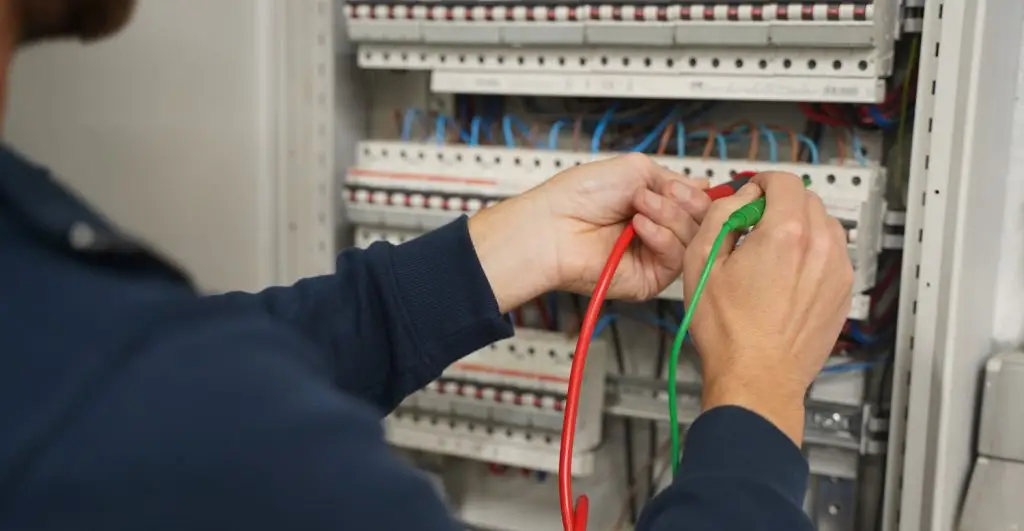
The 10 most common breaches during an electrical inspection of a home
An electrical inspection is a mandatory part of selling a property where the electrical installation was put into use before 1 October 1981. During this inspection, an accredited inspection body checks whether the installation complies with the applicable regulations. Book 1: Low-voltage and extra-low-voltage installations.
At Vastgoedexperts We notice that many owners wonder what the 10 most common breaches are during an electrical inspection of a home. Fortunately, many of these breaches are easy to resolve. Below, we list the most common findings.
-
Missing or incomplete single-line diagram
One of the most common comments is the absence of a single-line diagram. This diagram shows how the electrical installation is constructed and which circuits are present.
Even when the schedule does not align with the actual situation, this is considered a violation.
-
Situational diagram missing
In addition to the single-line diagram, a site plan is also mandatory. This indicates the location of sockets, switches, light points, and distribution boards.
Many older homes no longer have these plans, resulting in the installation automatically receiving a negative assessment.
-
Insufficient differential protection
Differentieelchakelaars beschermen bewoners tegen elektrocutie en beperken het risico op brand.
The inspector often notes that:
- there is no main differential present;
- the mandatory additional 30 mA differential is missing for damp rooms;
- the present differential does not meet current standards (correct type and sensitivity).
-
Insufficient earthing
A good earth connection is essential for the safety of the electrical installation.
Common problems include:
- no earth loop present;
- excessive spread resistance;
- sockets without working earth;
- missing equipotential bonding.
-
Openings in the fuse box
A distribution board must be fully enclosed so that no one can accidentally come into contact with live parts.
Missing cover plates or open spaces in the fuse box are among the most frequently noted comments.
-
Insufficient identification of the electrical circuits
Every fuse or circuit breaker must clearly indicate which room or circuit it protects.
When the machines are not labelled or incorrectly labelled, the inspector notes this as a breach.
-
Damaged or outdated electrical equipment
During the inspection, the general condition of the installation is also examined.
Examples include:
- damaged sockets;
- loose switches;
- visible or damaged wiring;
- outdated fuses or distribution boards.
-
Sockets without child protection
During renovations or extensions, sockets must comply with current safety regulations. Older sockets without child protection automatically lead to a breach.
-
Incorrectly made connections
Loose connections, poorly finished terminal blocks, or non-compliant connections are regularly found. Such defects increase the risk of overheating or short circuits.
-
Non-compliant extensions
Over the years, many homes have had extra power outlets, lighting, or outbuildings added without the installation being fully compliant with regulations.
Such extensions often lead to multiple infringements during inspection.
What does a non-conforming inspection report mean?
A non-conformity report does not mean that a property cannot be sold. The sale can proceed as normal.
The buyer is obliged, when the installation is not compliant, to have the electrical installation rectified within the legally stipulated timeframe and to have it re-inspected.
It is therefore often beneficial for sellers to investigate in advance which defects can be easily resolved. A limited investment can not only lead to a more favourable inspection report but also give potential buyers more confidence.
Decision
An electrical inspection doesn't have to be a stumbling block. Most infringements relate to documentation, security, or minor technical deficiencies which can be relatively easily addressed.
At Vastgoedexperts We guide sellers and buyers throughout the entire sales process. We don't just help you with the mandatory certificates, but also provide practical advice to optimally prepare your home for a successful sale.
Do you have any questions about a electrical inspection or do you want to know which certificates you need when selling your home? Feel free contact Stop with Vastgoedexperts. We are happy to help you further.